

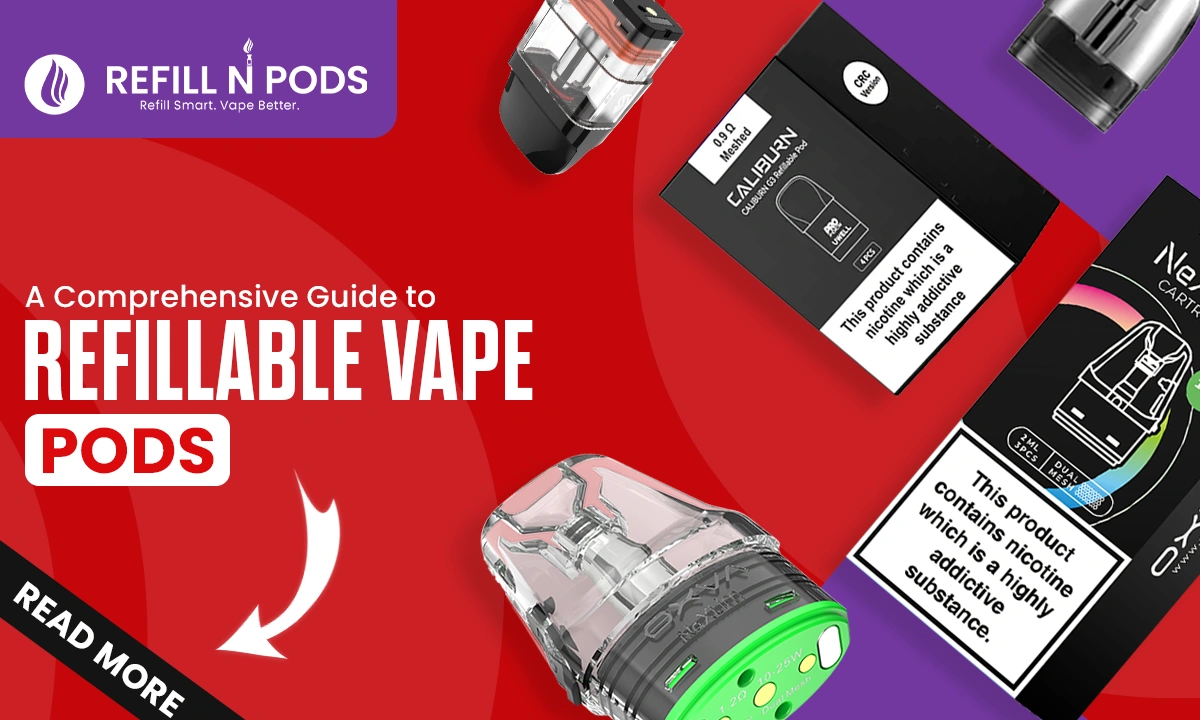
Refillable pods are reusable cartridges designed for manual e-liquid filling. Unlike sealed alternatives, refillable vape pods allow users to choose their preferred nicotine strength and flavour while maintaining control over performance and cost. Because these pods heat e-liquid through an integrated coil system, they deliver consistent vapour without combustion.
In this guide, you will learn how vape pods work, how to refill them correctly, what affects their lifespan, and how UK regulations apply.
What Are Refillable Vape Pods?
Refillable vape pods are reusable pod cartridges that users manually fill with e-liquid instead of replacing them with prefilled units. They contain a chamber for e-liquid, a coil for heating, and a mouthpiece for inhalation.
Because they are refillable, users can customise flavour profiles, nicotine strength, and VG PG ratios. This flexibility makes refillable pods practical for those who prefer controlled vape refills rather than sealed systems.
Explore Vape Pods to customise your flavours, nicotine strength, and enjoy full control over your vaping experience.
Key Components of Refillable Pods
Each refillable pod includes:
- E-liquid chamber that stores vape refills
- An integrated or replaceable coil that heats the liquid
- Wicking material that absorbs e-liquid
- Fill port designed for leak-resistant refilling
- Airflow pathway that directs vapour smoothly
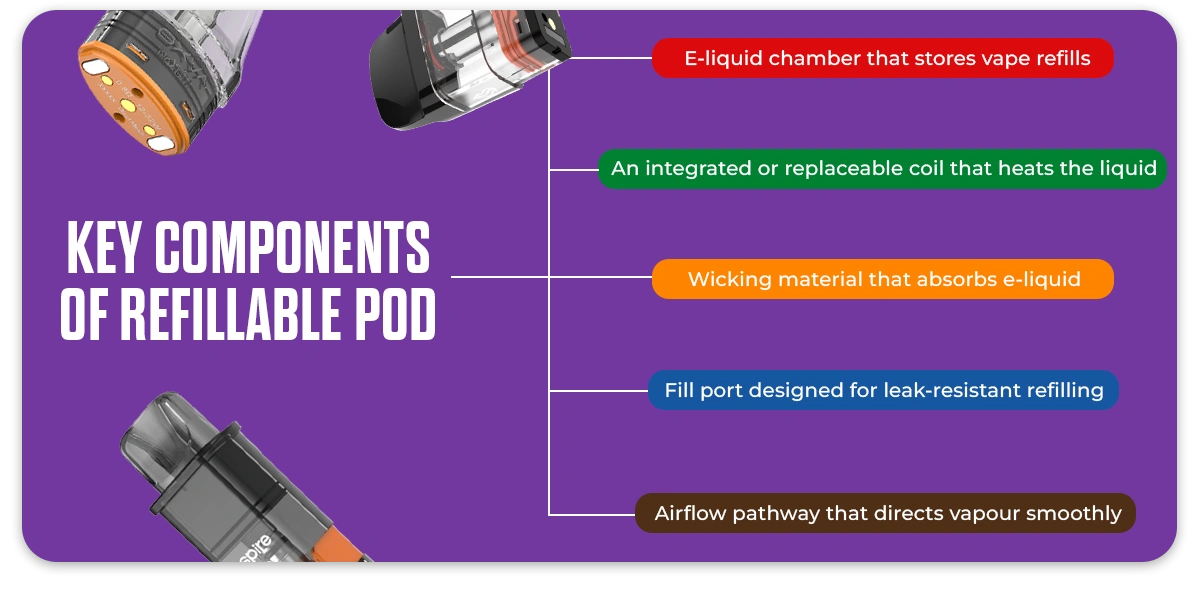
Together, these components regulate vapour production and flavour consistency.
How Refillable Pods Differ from Prefilled Pods
Feature | Refillable Pods | Prefilled Pods |
Filling Method | Manual filling | Arrive pre-sealed |
Flavour Options | Wide variety, flexible | Limited to factory flavour |
| Nicotine Strength | Adjustable | Fixed strength |
| Cost | Lower long-term refill cost | Higher per-use cost |
| Handling | Requires care to prevent leaks and coil damage | Ready to use, minimal maintenance |
How Refillable Vape Pods Work
Refillable vape pods produce vapour by heating manually added e-liquid through a built-in coil. When activated, the coil warms the saturated wick, which turns liquid into inhalable vapour.
Because the process relies on saturation and controlled heating, correct priming directly affects flavour quality and coil lifespan.
Get Refillable Pods and enjoy precise flavour control with every vape hit.
Types of Refillable Vape Pods
Refillable pods vary based on coil structure and filling mechanism.
- Built-In Coil Refillable Pods
- Replaceable Coil Refillable Pods
- Top-Fill & Side-Fill Designs
How to Refill a Vape Pod
Refilling vape pods correctly prevents leakage, flooding, and flavour loss.
- Remove the pod from the device.
- Open the fill port securely.
- Insert the e-liquid nozzle carefully.
- Fill slowly without overfilling.
- Close the port firmly.
- Let the pod sit before use.
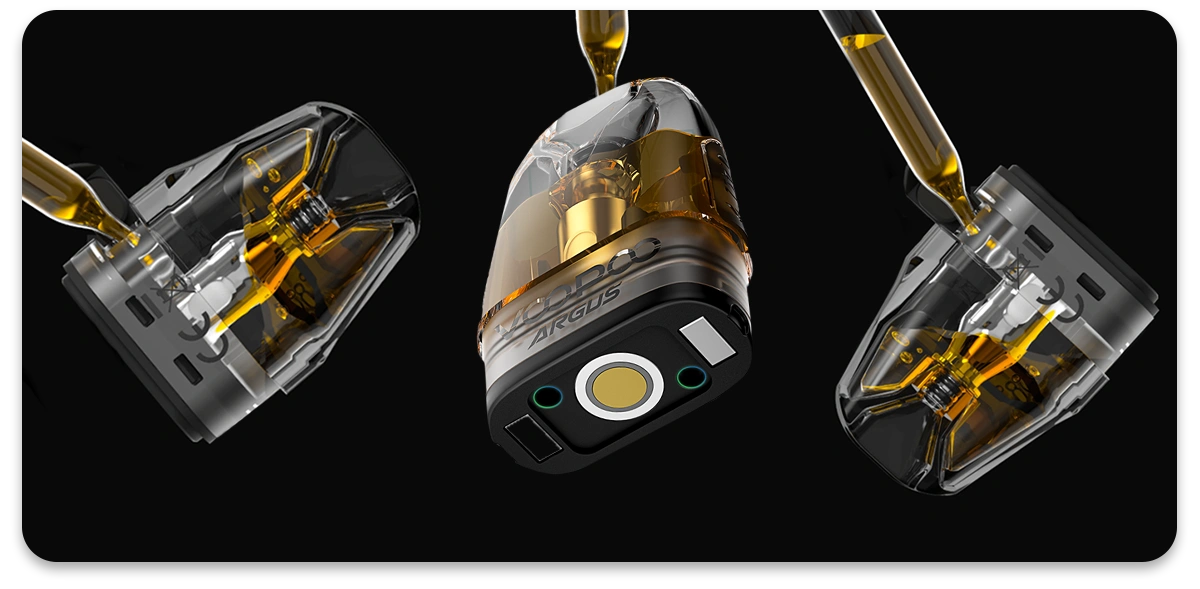
This method ensures proper wick saturation and stable vapour output.
Common Refilling Mistakes to Avoid
- Overfilling the chamber
- Leaving the fill port loose
- Using incompatible thick e-liquid
- Inhaling immediately after filling
Correct handling protects refillable vape pods from early damage.
Refillable Pod Performance and Vapour Quality
Performance depends on coil design, airflow balance, and liquid compatibility.
Flavour Intensity
Refillable vape pods deliver consistent flavour when wick saturation remains stable. Proper priming and balanced VG PG ratios improve taste clarity.
Vapour Production
Airflow structure influences density. Restricted airflow produces tighter draws, while open airflow increases vapour volume.
Nicotine Salt Compatibility
Most refillable pods perform best with 50/50 nicotine salt e-liquids. Balanced viscosity supports smooth wicking and stable vapour production.
How to Choose a Compatible E-Liquid For Refillable Pods
Refillable pods are generally optimised for 50/50 VG PG blends. This ratio ensures efficient coil saturation and controlled vapour production.
Best VG PG Ratios: 50/50 blends support smooth nicotine delivery and reduce coil clogging. Thicker liquids may struggle to wick properly.
Using Nicotine Salts in Pods: Nicotine salts absorb quickly and provide a smoother throat sensation at lower wattage levels. Therefore, they align well with pod coil resistance.
Safety Considerations When Using Vape Pod Refills
Although refillable pods eliminate combustion, they still deliver nicotine, so use them responsibly.
- First, choose a suitable nicotine strength; additionally, avoid high concentrations.
- Always store pods away from children and direct sunlight to maintain safety and quality.
- Ensure pods are sealed properly to prevent leaks and contamination.
- Never use an empty pod; in addition, avoid dry firing to protect the coil.
- In the UK, pods must meet TPD regulations, including a 2 ml capacity and 20 mg nicotine limit.
- Finally, check labelling for ingredients, warnings, and safety instructions.
Following these regulations ensures compliance and consumer transparency.
Who Should Use Refillable Pods?
Refillable pods suit users who prefer flavour flexibility and controlled nicotine strength.
They are suitable for:
- Moderate nicotine users
- Users who prefer custom vape refills
- Those seeking cost efficiency
However, users who want minimal maintenance may prefer simpler systems.
Conclusion
Refillable pods offer controlled nicotine delivery, flavour flexibility, and long-term cost efficiency. When you refill them correctly, prime coils properly, and use compatible vape refills, performance remains consistent and predictable.
At the same time, UK regulations, including the 2 ml pod capacity limit and 20 mg nicotine cap, define clear safety and compliance boundaries. Therefore, informed usage is essential.
In short, refillable vape pods combine customisation, performance stability, and regulatory structure when handled responsibly.
For more detailed insights on usage, performance, and safety, read our Vape Pods Guide.
Frequently Asked Questions (FAQs)
1. What are refillable vape pods, and how do they work?
Refillable vape pods are reusable cartridges that hold e-liquid and heat it through a built-in coil to produce vapour. Because you manually add vape refills, you control flavour, nicotine strength, and overall performance consistency.
2. How long do refillable pods typically last?
Refillable pods usually last between 5 and 14 days. However, coil resistance, e-liquid sweetness, and usage frequency directly affect lifespan. Replacing worn vape pods promptly maintains flavour quality and prevents leaking or burnt taste issues.
3. Can I use any vape refills in refillable vape pods?
Most refillable vape pods work best with 50/50 VG PG e-liquids or nicotine salts. Thicker liquids may reduce wicking efficiency. Therefore, always match vape refills to pod compatibility for stable vapour production and coil longevity.
4. Why do my vape pods leak sometimes?
Refillable pods usually leak due to overfilling, loose seals, or damaged silicone plugs. To prevent this, fill slowly, close the port firmly, and avoid exceeding capacity. Proper handling significantly reduces leakage and maintains pod performance.
5. Are refillable vape pods legal in the UK?
Yes, refillable vape pods are legal in the UK. However, they must follow regulations. Pods cannot exceed 2 ml capacity, and vape refills cannot exceed 20 mg nicotine strength.